News Story
Enhancing the Role of Private Pensions in Albania
As part of ongoing efforts to improve financial security for its aging population, Albania has undertaken comprehensive pension system reforms.


The Need for Pension Reform
Albania’s pension system primarily depends on social pensions and a mandatory social security scheme, with a replacement rate of 35 percent, which is below both the International Labour Organization Convention 102 target of 40 percent and the commonly desired range of 50 to 70 percent. Demographic trends, including an aging population and high outmigration, pose further risks to the system’s sustainability. The 2014 pension reforms improved the link between contributions and benefits, but challenges remain. Factors such as an aging population, high outmigration rates, and increasing life expectancy have made it necessary to re-evaluate the pension landscape and explore more sustainable solutions.
Key Focus Areas of the Conference
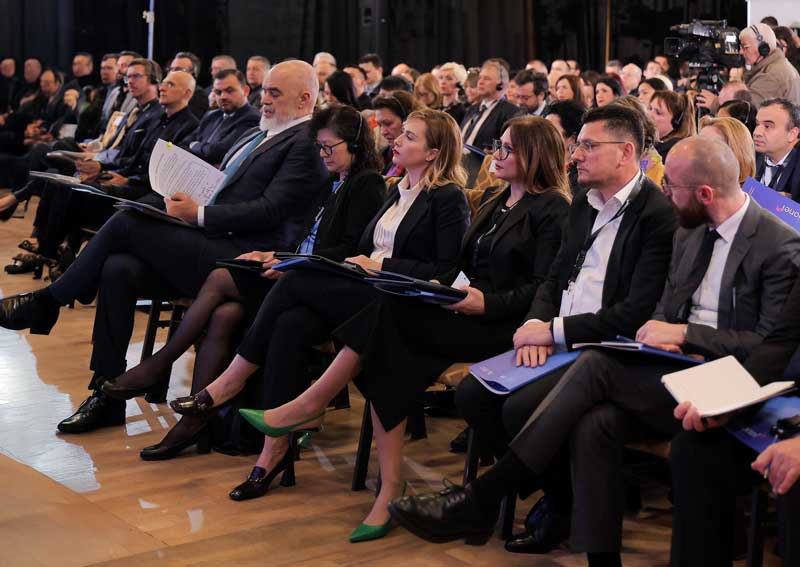
The discussions focused on strategies to enhance pension system sustainability. Participants explored measures to encourage longer working lives, improve compliance and coverage, and reform supplementary pensions. Another critical area of discussion was the potential transition to a multi-pillar pension model, which would combine public and private pensions to ensure adequacy, sustainability, and broad coverage. The ultimate objective is to develop a resilient and inclusive pension system that guarantees financial security for all Albanians in their retirement years.
The Role of Private Pensions
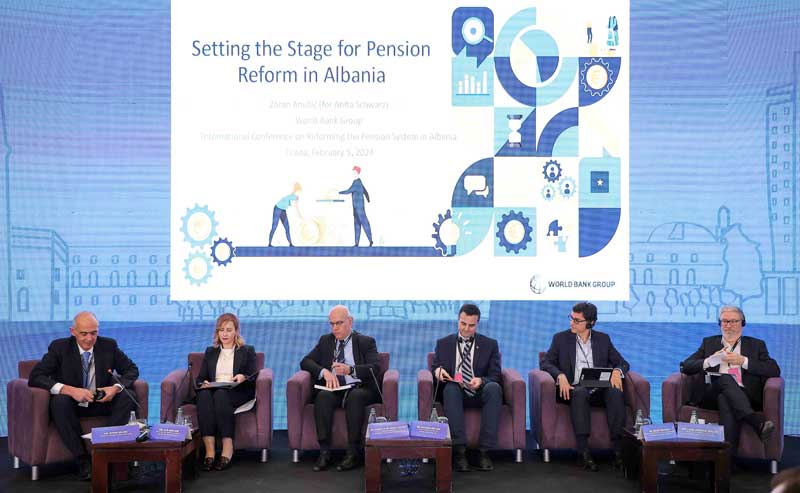
A dedicated session on private pensions featured a keynote presentation by Mimoza Kaci, AFSA General Executive Director, followed by a panel discussion with Ahmet Ismaili, Governor of the Central Bank of Kosovo, Tomislav Ridzak, Deputy President of the Croatian Financial Services Agency, and Darko Sazdov, Council of Experts, Agency for the Supervision of Fully Funded Pensions in North Macedonia. During the discussion, panelists shared insights from their respective countries. They emphasized the importance of mandatory defined contribution pensions, rather than relying solely on voluntary (third pillar) pensions, to increase coverage. The challenges of developing long-term investment strategies, particularly those that include foreign investments, were also highlighted. Additionally, the discussion underscored the importance of clear and transparent communication to build trust and improve public understanding of pension systems.

Progress in Albania’s Private Pension Sector
Albania has made significant progress in strengthening private pensions, although this segment remains in its early stages. A new law on private pension funds, approved in November 2023, aligns with the European Union Institutions for Occupational Retirement Provision (IORP II directive). This legislation is designed to encourage greater participation in private pension schemes by expanding investment opportunities, introducing fiscal incentives, strengthening governance, and enhancing member protections.
The World Bank, through the F4D program, has been actively supporting AFSA in finalizing bylaws for the new private pensions law. Additionally, efforts have been made to analyze challenges and explore policy options to enhance private pensions' contribution to Albania’s long-term pension sustainability.
As Albania moves forward with these critical reforms, the integration of public and private pension systems will play a vital role in ensuring sustainable and secure retirements for future generations.